Baltic Hats: Bold Morning Star
Baltic Hats: Bold Morning Star Latvian Auseklis
Dawn and the first star observed in the morning was significant to many ancient cultures around the world. In Latvian mythology, dawn and the first star of dawn was associated with the deity Auseklis. He was depicted as a young man, sometimes mischievous or playful, who courted the Sun’s daughter. In some folksongs, the Sun also gifted him with a horse. In other folksongs, he helps with the Sun’s bathhouse (sauna) by pouring water over the hot stones.
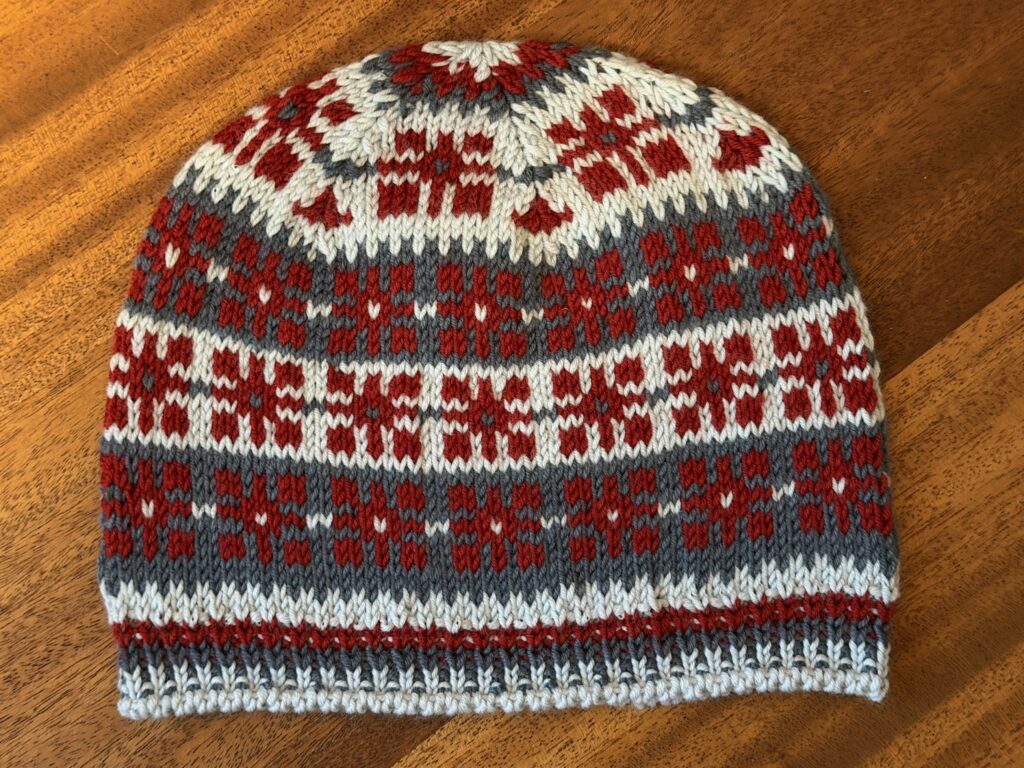
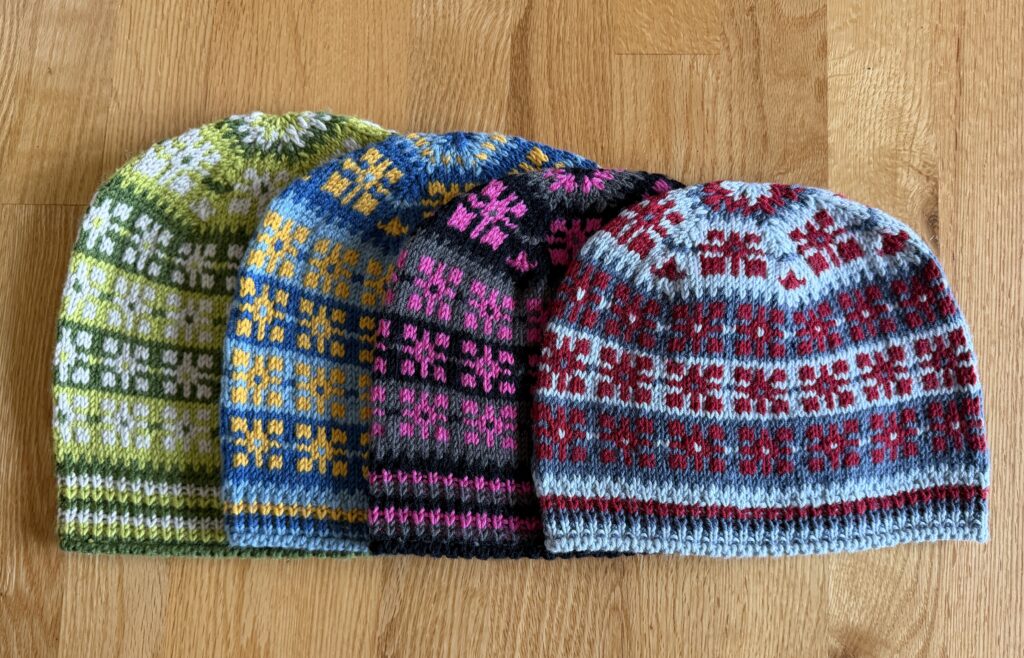
In Baltic textiles, the morning star was symbolized by an eight-pointed star. In Latvia, the eight-pointed star symbol was used to ward off evil and provide protection. It was often inscribed on houses and doorways.
Auseklis, the dawn, also represented the triumph of light over darkness. During Latvia’s most recent road to independence (1987 – 1991), the eight-pointed star became a symbol of non-violent resistance against Soviet rule. It remains a symbol that represents Latvian heritage.
Nitten Nair, a self-described mythology enthusiast, offers a summary about Auseklis here. Of note, he does not mention Aušrinė, the Lithuanian deity of the morning star.
Here is a link to a Latvian song about the dawn “Gaismiņa ausa” and some of the lyrics in Latvian with an English AI translation and my own changing of the translation where I knew AI got it wrong (cuckoo bird not rooster for example):
Gaismeņa ausa, sauleite lẽce Jaunais puiškinis zyrgu sadluoja. Zyrgu sedluoja, tuoli dūmuoja: Juošu, es juošu iz lelu cīmu, Iz lelu cīmu, iz jaunu meitu. Tev, jauns puiškinis, treis duorzi prīškā: Pyrmejā duorzā kyukoj dzeguze, Ūtrejā duorzā syt laksteigala, Trešejā duorzā sēd jauana meita. Tev dzaguzeite uoriski bārzi, Tev laksteigla mainys upinis, Tev jauanā meiter sveša puseite.
The dawn was breaking, the sun was rising The young man saddled his horse. He saddled his horse, and the mist was rising: I’m riding, I’m riding to the village, To the village, to the young girl. For you, young lad, three doors lie ahead: In the first door, a cuckoo bird sings, In the second door, a nightingale sings, In the third door, a young maiden sits. The cuckoo bird will sing you a song, The nightingale will change your mood, The young maiden will be a stranger to you.
I don’t speak or read Latvian, and although Latvian and Lithuanian are the only two languages still spoken within their Baltic language group, I can only guess at what some of the words mean, others resemble some Lithuanian words. This song may also be written in dialect. This translation I got with the help of an AI translator, but I believe that overall the song is about a young man who saddles his horse at dawn to set out to find himself a wife. I’ll need to ask a Latvian speaker to correct any errors.