Baltic Hats: Crossroads
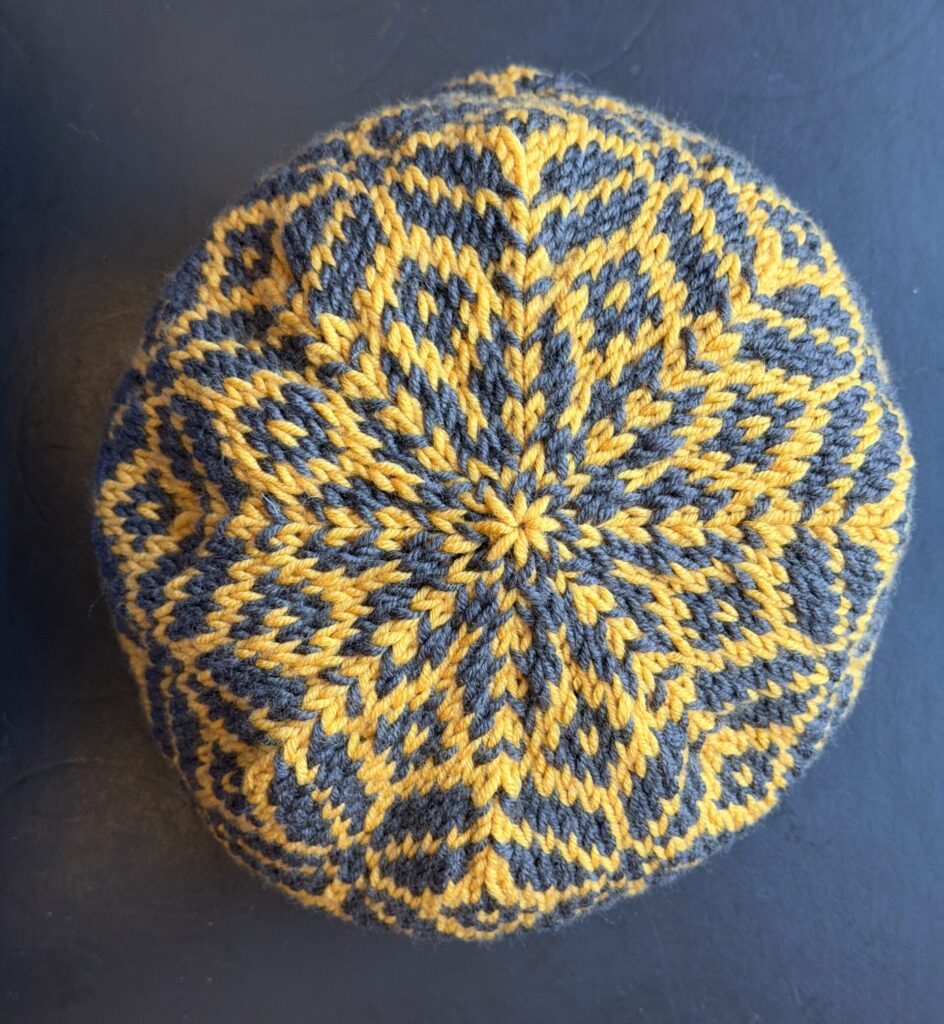

Crossroads have played an active role in our imaginations for centuries. Imagine yourself a traveler from centuries ago coming to a four way, dusty intersection, no town apparent in any direction. It’s dusk and the daylight is fading. Do you linger? This might depend on where you are in the world and where you came from. If you were in the Baltics, you might have left an offering to the gods like a handwoven sash or grains or perhaps you would you hurry on to your destination afraid of this space that was believed an intersection between the physical world and the supernatural.
In Lithuanian mythology a crossroad was a liminal space, where spirits, souls of the dead and mythological deities could be contacted. Travelers left offerings like coins, grain or other small items at crossroads to ensure a safe journey and to ask for protection on their travels. The deities associated with crossroads include Kelių Dievas, god of roads, and Laima, the goddess of fortune and one of the three goddesses of Fate (Laima, Dalia, Giltinė).
In the countryside, tall wooden posts bearing crosses or small shrines mark some crossroads. Since ancient times, Baltic people had a tradition of erecting tall wooden pillars at important sites. With the acceptance of Christianity in the late 12th century, these pillars eventually became wooden crosses and tiny shrines that retained pagan symbols such as the sun, moon, thunderbolts or the tree of life and other elements from nature. These unique crosses can be found at some crossroads, villages and on isolated forest trails today. Lithuanian cross-crafting (kryždirbystė) is on the UNESCO Intangible Cultural Heritage of Humanity list.
Not just in Baltic cultures, but in many cultures across the globe, crossroads were believed to be places where spirits dwelled. A couple famous musicians were rumored to have made deals with the devil at a crossroads including Niccolò Pagnini, an early 19th century violin virtuoso and “rock star” of the violin referred to as “The Devil’s Violinist” and later Robert Johnson, a phenomenal guitar player of the early 20th century who was considered a major influence on the emergence of rock and roll. They were both rumored to have traded their souls to the devil at a crossroads in exchange for their exceptional musical abilities.
Listen here to Leonidas Kavakos play Paganini’s “Caprice No.24” and Robert Johnson play and sing “Crossroads” here.
To learn more about crossroads, you can find a link here to a book by Bill Angus about Crossroads.